

If you finished antibiotics for Lyme disease months ago and you’re still exhausted, achy, or foggy most days, you’ve probably run into two confusing terms: chronic Lyme disease and post-treatment Lyme disease syndrome, or PTLDS. Doctors use them differently, and sometimes argue about them outright. The label you’re given can even shape how seriously your symptoms get taken.
Here’s what actually separates the two, why the disagreement exists, and why we care less about which term fits you than about what’s actually driving your symptoms.
The Real Difference Between Chronic Lyme Disease and PTLDS (It’s Not Just Semantics)
Post-treatment Lyme disease syndrome is the term the CDC prefers, and it has an actual clinical definition: symptoms like fatigue, joint pain, and cognitive difficulties that persist for six months or more after you’ve completed a standard course of antibiotics for Lyme disease. It’s a recognized, named pattern. “Chronic Lyme disease”, by contrast, gets used far more loosely.
Some patients use it to describe the exact same lingering symptoms as PTLDS. Others use it to describe ongoing illness even without a confirmed positive test, or illness that followed a different course entirely. That looseness is exactly where the disagreement between conventional and integrative medicine tends to start.
The symptoms themselves can also look different from person to person, which adds to the confusion. Some patients mostly deal with joint pain that migrates from one area to another. Others are dealing primarily with cognitive symptoms, word-finding trouble, short-term memory lapses, difficulty concentrating at work. Others have a cardiac or neurological component, like heart palpitations or facial nerve involvement. All of it can technically fall under either term, which is part of why one blanket label rarely tells a doctor enough to actually treat you.
Why the CDC Uses “PTLDS” and What That Actually Means for You
The CDC specifically avoids the term “chronic Lyme disease” because it implies something the research hasn’t established: that your symptoms are being caused by an ongoing, active infection. “PTLDS” was chosen instead because researchers consider it etiologically neutral. It describes the pattern of lingering symptoms without claiming to know the cause.
That distinction matters, because it doesn’t mean your symptoms aren’t real. It means the cause hasn’t been pinned down yet, and that gap is a big part of why treatment approaches vary so much from one doctor’s office to the next.
The Two Competing Theories Behind Lingering Symptoms
Right now there are two leading explanations for why symptoms persist after treatment, and honestly, the evidence hasn’t fully settled either way. The first is persistent infection: the idea that some Borrelia bacteria survive a standard course of antibiotics. That’s not as far-fetched as it sounds. Borrelia replicates far more slowly than most bacteria, roughly every one to sixteen days, compared to about every twenty minutes for many common infections. Antibiotics that work by targeting actively dividing bacteria can simply miss cells that are dormant or replicating on a longer cycle.
The second theory is immune dysregulation: the infection itself is gone, but the immune system stays switched on, continuing to produce inflammation and symptoms long after the original trigger has cleared. This pattern shows up in other post-infectious illnesses too, which is part of why researchers take it seriously.
Some studies have also found that people with PTLDS have higher rates of certain co-occurring issues, like anemia and elevated cholesterol, compared to people who recovered without lingering symptoms. That doesn’t prove which theory is correct. It’s one more piece of a puzzle that’s still being worked out, which is exactly why we don’t build a treatment plan around a label alone.

Why the Label You’re Given Shouldn’t Decide Your Treatment Plan
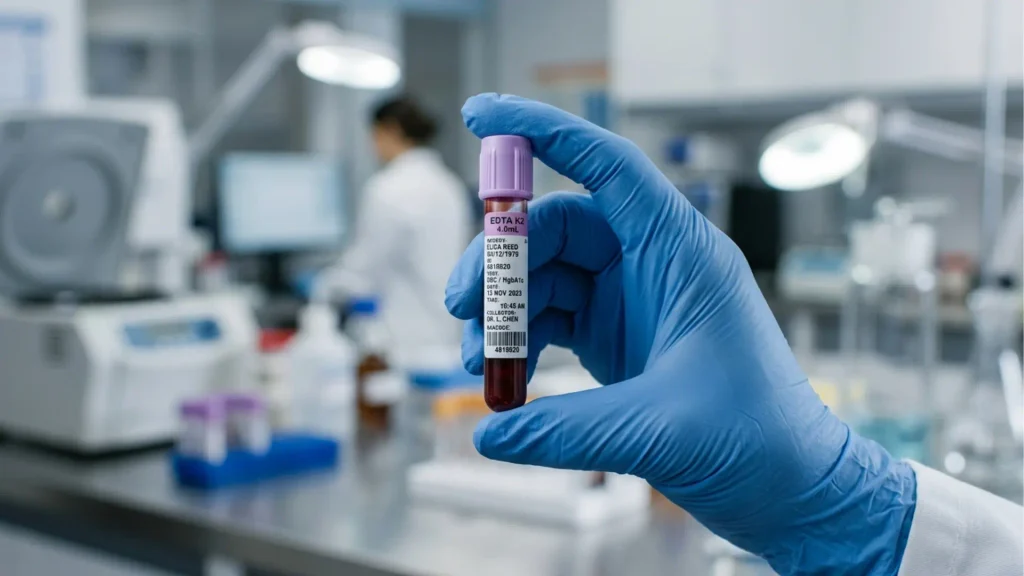
Instead of spending your first appointment debating which term technically applies to you, we start with testing that actually tells us something.
What We Actually Test Before We Ever Argue About Terminology
That includes specialty Lyme and co-infection testing through Lyme-specific lab vendors, since standard panels often miss the full picture, along with a broader look at inflammation, immune function, and any autoimmune activity that might be layered on top.
We also check for co-infections you may have picked up alongside Lyme, like Bartonella, Babesia, Anaplasma, or Ehrlichia, which rarely get tested for unless someone specifically orders them. The goal isn’t to prove you fit into one camp or the other. It’s to find out what’s actually happening in your body right now, this month, not six months ago when you were first diagnosed.
This is also where your history matters more than a single form. We’ll ask about the timeline of your original diagnosis and treatment, whether your symptoms fully resolved and then came back or never fully went away, and whether anything, a new stressor, an illness, a change in sleep, seemed to line up with a flare. That timeline often points us toward one theory over the other faster than another round of the same lab work would.
Does It Matter for How You’re Treated, or Just for Insurance Paperwork?
It matters for both, honestly. On the clinical side, whether we’re leaning toward ongoing infection or immune dysregulation genuinely changes what we prescribe and recommend, which is the whole point of testing before treating.
On the administrative side, since Fairfield Family Health doesn’t bill insurance directly, the specific diagnostic term on your chart matters less for reimbursement purposes than it might at a conventional practice tied to insurance coding requirements. What matters more is that your chart reflects an accurate, specific picture of your case, something you can also bring to any other doctor you’re working with.
When Symptoms Point to Ongoing Infection vs. Immune Dysregulation
What we find changes what we recommend. If testing points toward ongoing infection or an unresolved co-infection, antibiotics can still be part of the plan. Naturopathic doctors in Connecticut don’t currently have prescriptive authority under state law, but our team includes providers who do, working alongside our naturopathic physicians, so antibiotics stay on the table when the picture calls for them. We also are licensed in multiple states, and now have a new location in NH, where ND’s have prescriptive rights.
If the evidence points more toward immune dysregulation, meaning the infection is likely cleared but your immune system is still running hot, the focus shifts toward calming and rebalancing that response through herbal medicine, immune support, IV therapy, and other tools built for exactly that problem. Either way, the plan comes from what your labs and history actually show, not from whichever term happened to land on your chart first.

This also explains why some patients feel dismissed after a round of antibiotics “should have” worked. If you’re still dealing with symptoms and no one has looked past the original diagnosis, that’s worth revisiting. Read more about what happens when Lyme disease goes untreated or undertreated for a closer look at why this window matters.
Suffering With Symptoms?
Whether you’ve been told you have PTLDS, chronic Lyme disease, or nothing more specific than “your labs are normal”, the label matters far less than a thorough workup that actually explains what’s going on. Our team blends naturopathic, functional, and conventional medicine specifically so we’re not locked into one theory or one treatment tool. If you’re still dealing with symptoms months after finishing treatment, we can help you understand what’s actually driving them and build a plan around that, not around whichever term happened to be written on your last chart.
If you’re stuck between a PTLDS diagnosis and symptoms that haven’t budged, call Fairfield Family Health at 203-254-9957 or request an appointment online. We’ll start with real testing, not another argument about terminology.