
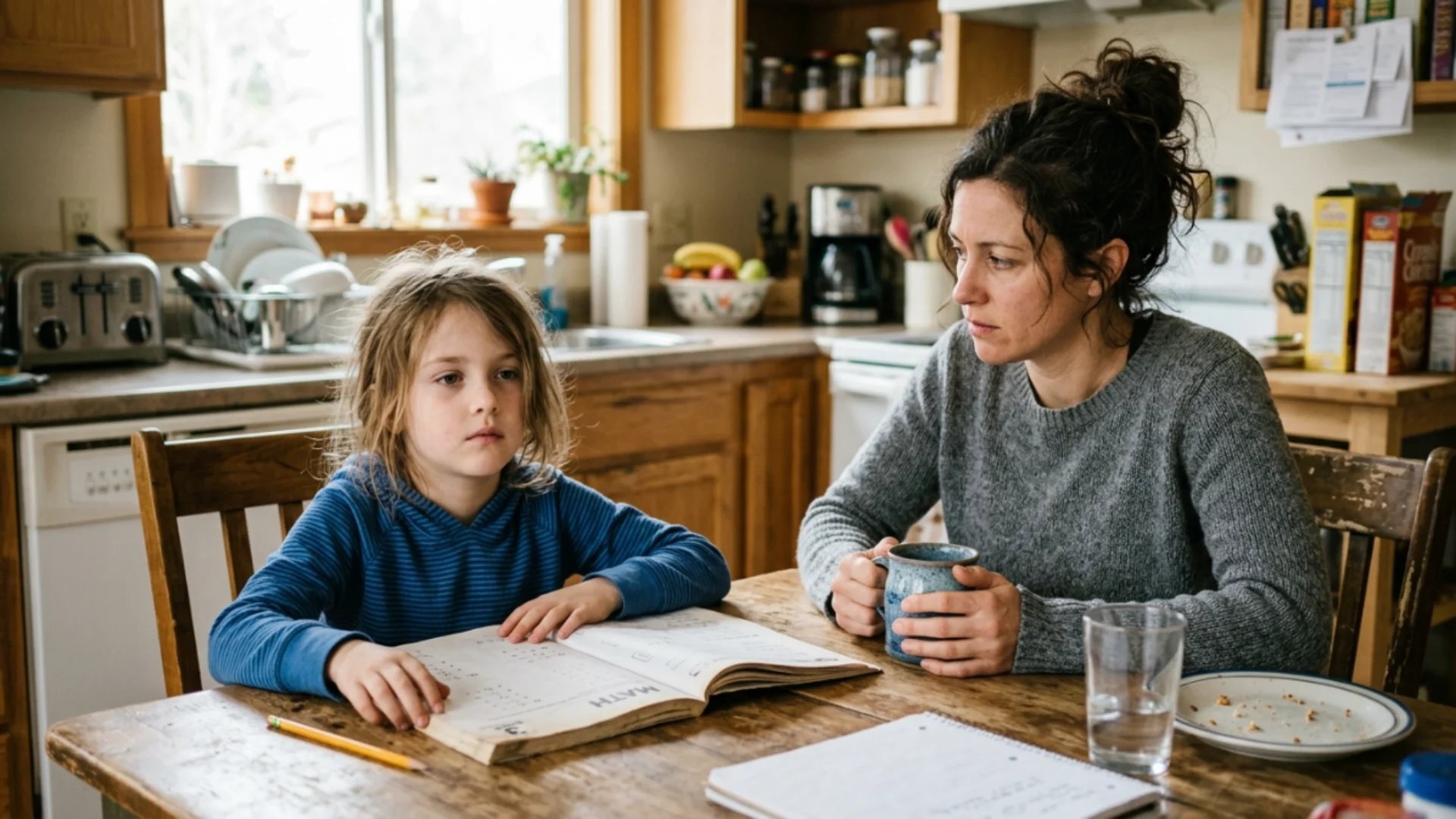
You’ve already been down the rabbit hole. You’ve read the forums at midnight, asked questions in the Facebook groups, maybe printed something to show your pediatrician who didn’t seem interested. I know you want to know if what you’re seeing actually qualifies, and what to do next.
So let’s get into it.
The Symptom Checklist Parents Aren’t Getting From Their Pediatrician
Here’s how you can judge your child’s behavior…

The difference between gradual behavior change and PANS/PANDAS onset
The timeline is the diagnosis.
Gradual behavior changes like a kid who’s always been a little anxious, who’s slowly become more rigid over months, that’s one clinical picture. PANS/PANDAS is something else.
It’s the child who was fine on Thursday and then, almost overnight, was a different person. Sudden, severe OCD or intrusive thoughts. Separation anxiety that came out of nowhere. Handwriting that deteriorated in a week. Tics that appeared after a strep infection.
That dramatic, abrupt onset is what distinguishes PANS/PANDAS from other psychiatric or behavioral conditions. Not the type of symptom, the speed.
Before any appointment, it helps to log what you’re seeing across these categories:
- OCD or intrusive thoughts: new fears, rituals, or compulsions
- Separation anxiety: sudden and out of proportion to their age
- Emotional dysregulation: rages, emotional collapses that feel neurological, not behavioral
- Sensory sensitivity: new reactions to sounds, textures, clothing
- Urinary frequency: often overlooked, but a recognized neurological symptom
- Cognitive regression: handwriting changes, difficulty with tasks they’d mastered
- Tics: motor or vocal, appearing after an illness
If several of these appeared together, suddenly, within days of a clear trigger then that’s the clinical picture worth pursuing. You’re not imagining it.
The Lyme connection, especially important in Fairfield County
This part matters a lot if you’re in Fairfield County, and it’s what most PANS/PANDAS content glosses over.
PANDAS specifically refers to cases triggered by streptococcal infection. But PANS, Pediatric Acute-onset Neuropsychiatric Syndrome, is broader. It can be triggered by Lyme disease, Bartonella, mycoplasma, viruses, and other inflammatory or infectious insults.
Connecticut is one of the highest Lyme-endemic states in the country, and Fairfield County sits in the heart of tick territory. That means that in this region, the question “what triggered my child’s PANS?” needs to include a serious look at tick-borne illness alongside strep not as an afterthought, but as a primary consideration.
A standard strep swab or even a basic Lyme Western Blot often isn’t enough. Children with PANS triggered by Lyme frequently test negative on standard panels. Specialty labs, co-infection testing (Bartonella, Babesia, mycoplasma), and a clinician who understands how to interpret those results are part of what makes evaluation in this region different from a general pediatric workup.
If your child’s PANS onset happened after a tick bite, a summer in the woods, or unexplained illness that nobody quite figured out, that history matters. Bring it to the appointment. See our post on what happens when Lyme disease goes untreated if you’re wondering how Lyme connects to neurological symptoms, the overlap is real and it runs deep.
What Happens at a PANS/PANDAS Evaluation at Fairfield Family Health
Here is our approach…
Why the intake is longer (and why that matters)
The first appointment isn’t 15 minutes. It’s 60 to 90 minutes, sometimes longer, because the history is the diagnosis.
We’re not just looking at current symptoms. We’re building a timeline:
- When did the behavior change start?
- What was happening in the weeks before?
- Any recent strep?
- Any tick exposure?
- Any illness, even one that seemed minor?
- Has your child had strep before, and if so, what happened to their behavior around those episodes?
That kind of granular history is what connects the dots. Then we build from there with labs, not just standard Lyme and strep titers, but a broader panel that might include ASO and anti-DNase-B antibodies, co-infection panels, inflammatory markers, and a nutritional assessment to understand what’s driving the immune response.
This is why longer appointments cost more than a standard peds visit. You’re paying for someone to investigate, not just rule out the obvious.
What “integrative” treatment means, beyond the supplements

Here’s what people often misunderstand about integrative PANS/PANDAS care: it’s not a softer version of treatment. In many cases, it’s more thorough.
An integrative approach at Fairfield Family Health means treating the infection (whatever it is like strep, Lyme, Bartonella mycoplasma), addressing the immune response that’s causing the brain inflammation, and supporting the nervous system through flares.
That might look like:
- Antimicrobial treatment: herbal, pharmaceutical, or both, depending on the pathogen and severity
- Immune modulation: because the problem isn’t just the infection, it’s what the immune system is doing in response. Immunotherapy protocols can play a role in calming the autoimmune component
- Nervous system support: craniosacral therapy is one tool we use to help regulate the neurological system during active flares. It’s not a substitute for treating the infection; it supports the child through it
- Nutritional and dietary support: the gut-brain connection in PANS is real. Nutrition plays a direct role in mental and neurological health, and anti-inflammatory dietary changes are part of most protocols
If the trigger is Lyme or a co-infection, treatment will also address that directly, because you cannot calm a PANS presentation if the underlying pathogen is still active.
Your Questions, Answered Directly
Can PANS/PANDAS be treated without antibiotics?
It depends entirely on the trigger.
Strep-triggered PANDAS typically requires some form of antimicrobial treatment though naturopathic practitioners often combine pharmaceutical antibiotics with herbal antimicrobials, or use herbal-only protocols in milder or maintenance-phase cases.
Lyme-triggered PANS is more nuanced. The co-infection picture, the duration of infection, and how the immune system has responded all affect whether pharmaceutical or herbal antimicrobials are appropriate and in what combination.
Viral triggers (certain cases of PANS) may not require antimicrobials at all, focusing instead on immune support and anti-inflammatory interventions.
There’s no single answer that applies to every child. That’s actually the point of a thorough evaluation.
How long does treatment take?
Honest answer: it varies, and anyone who gives you a flat timeline without knowing your child’s case is guessing.
For acute PANS a recent, clear trigger, relatively short symptom duration and many families see meaningful stabilization within 3 to 4 months of correct treatment.
Chronic or cyclical PANS are where symptoms have been present for a year or more, or where flares keep recurring, will take longer. Six to twelve months of active treatment is more realistic, with ongoing monitoring and support through future stressors or illnesses.
What determines pace: how quickly we identify the trigger, the severity of the neurological involvement, whether there are co-infections, and how the child’s immune system responds to treatment.
Flares are also normal, and a good treatment plan accounts for them. Recovery from PANS isn’t always linear. Having a clinician who expects that and has a protocol for it matters.
Does insurance cover PANS/PANDAS evaluation and treatment?
Naturopathic and functional medicine appointments are typically out-of-pocket. Some labs may be covered depending on your insurance plan, it’s worth calling your insurer before the first visit. We can provide a superbill that you can submit for possible reimbursement.
HSA and FSA accounts can usually be used for these visits. If you have a PPO plan with out-of-network benefits, it’s worth asking what percentage of specialist visits they’ll reimburse even partial coverage helps.
PANS/PANDAS is Real & Diagnosable
Parents who’ve watched their child change almost overnight aren’t overreacting. They’re usually right, and in Fairfield County, where Lyme runs high and most pediatricians aren’t trained to connect tick exposure to neurological symptoms finding a specialist who understands the full picture matters enormously.
The path forward doesn’t require another referral to someone who doesn’t talk to the last specialist. It starts with one thorough evaluation, a clinician who takes the history seriously, and a treatment plan that actually addresses the trigger, not just the behavior.
Ready to talk through what you’re seeing? Schedule a consultation with our PANS/PANDAS team at Fairfield Family Health. We’ll help you figure out the right next step.